Middle-aged patient presenting with palpitations and dizziness.
What does the ECG show?
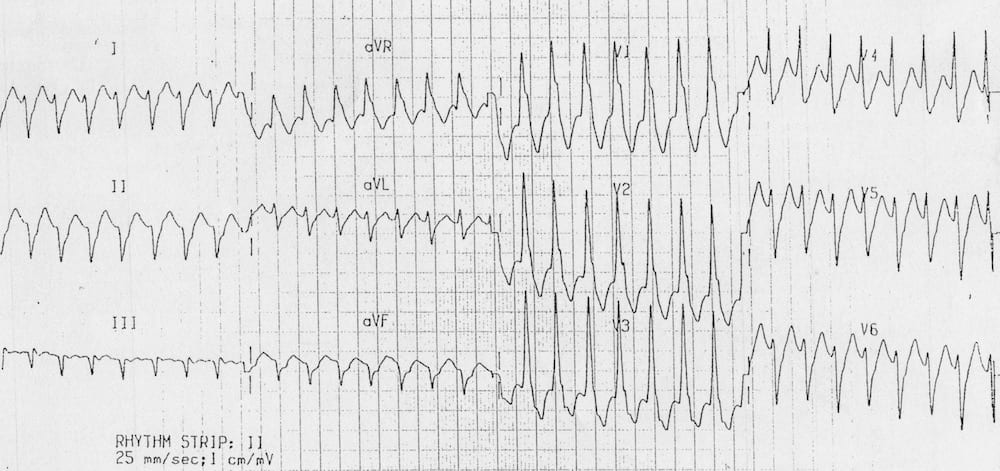
Describe and interpret this ECG
ECG ANSWER and INTERPRETATION
Diagnosis
This ECG shows a regular broad complex tachycardia with an RSR’ pattern in V1.
The differential diagnosis could include:
On closer inspection, the ECG demonstrates some classic features of ventricular tachycardia:
- Northwest axis — QRS is positive in aVR, negative in I and aVF
- The taller left rabbit ear sign — There is an atypical RBBB pattern in V1, where the left “rabbit ear” is taller than the right
- Negative QRS complex (R/S ratio < 1) in V6
These findings indicate VT rather than SVT with aberrancy.
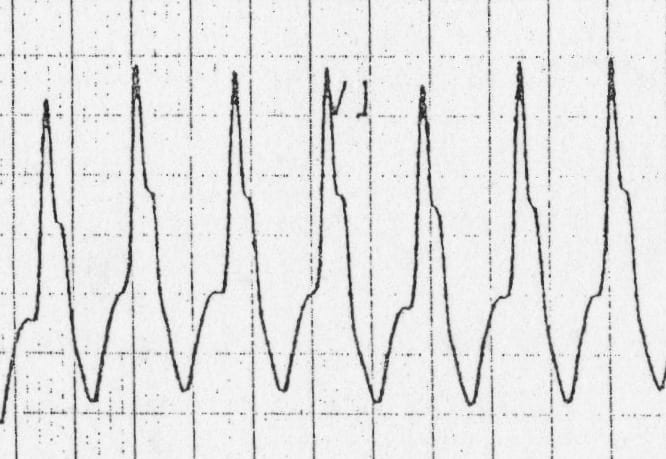
- Taller left rabbit ear = VT
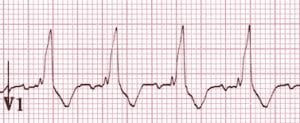
- Taller right rabbit ear = RBBB
CLINICAL PEARLS
Other factors that increase the likelihood of VT in patients presenting with regular broad complex tachycardia include:
- Age > 35 (positive predictive value of 85%)
- Structural heart disease — e.g. IHD, CCF, cardiomyopathy
- Family history of sudden cardiac death or arrhythmogenic conditions such as HOCM, Brugada syndrome or ARVD that are associated with episodes of VT
In any patient with a broad complex rhythm, also consider the possibility of toxic / metabolic conditions such as hyperkalaemia or sodium-channel blockade.
Emergency Physician in Prehospital and Retrieval Medicine in Sydney, Australia. He has a passion for ECG interpretation and medical education | ECG Library |